How to Choose a Wedding Catering Style That Fits Your Day
Wedding catering styles affect far more than what arrives on the plate. The way food is served can slow the day into a beautiful shared meal, encourage conversation around the table, bring guests into the action or keep the celebration moving as people mingle.
The difficult part is deciding which experience feels right for your wedding.
At a glance
The best wedding catering style is the one that supports the atmosphere, guest experience and flow of your day. Plated dining, sharing menus, food stations, buffets and more relaxed formats can all work beautifully, but each creates a different level of structure, movement and interaction. Your venue, guest list, timings and service expectations should guide the final choice.
- Wedding catering style is an experience decision, not simply a menu choice.
- Plated dining offers structure, elegant presentation and controlled service.
- Sharing menus and food stations can create warmth, movement and interaction.
- Relaxed wedding catering can still feel polished and special when food, presentation, staffing and timing are handled well.
- The best format should suit your guests, venue or marquee, timeline and the atmosphere you want to create.
Table of contents
- How to Choose a Wedding Catering Style That Fits Your Day
- How do you choose a wedding catering style?
- Why catering style shapes the whole feel of the day
- Is a sharing menu right for your wedding?
- When do food stations work well at weddings?
- Can relaxed wedding catering still feel premium?
- How does your venue or marquee affect the best catering style?
- What about marquee, estate and private home weddings?
- Choosing a style that feels right for you and your guests
- talk to Vanilla Bean about your wedding catering
- Wedding catering styles FAQs
How do you choose a wedding catering style?
Start with the feeling you want to create, rather than the format you think a wedding is supposed to have.
Do you picture guests settling in for a long, beautifully paced meal, with the wedding breakfast becoming one of the central moments of the day? Or would you rather people talk across tables, share dishes and enjoy a more generous, convivial style of dining?
Perhaps you want guests moving between spaces, discovering food as they go. Maybe the reception is intended to feel more like a wonderful party from the outset, with drinks, conversation and food flowing around one another rather than following a formal sequence.
These are more useful starting points than asking which wedding meal format is best.
Before choosing between the common wedding food service styles consider:
- Do we want the meal to feel formal, relaxed, interactive or party-led?
- Do we want guests mainly seated, or moving and mingling?
- Is the wedding breakfast a major focal point of the day?
- How much time have we allowed for food service?
- How many guests are attending?
- What does the venue, garden or marquee layout allow?
- Are there children, older guests or accessibility needs to consider?
- Do speeches need a clear, structured moment?
- Do we want the food itself to create theatre?
- How easily will the format accommodate dietary requirements?
There are financial and operational implications too. Different service styles may require different levels of staffing, equipment, tableware and preparation space, all of which can influence your overall wedding catering budget.
The menu itself is another conversation. Flavours, ingredients, seasonality and the dishes that feel personal to you all matter, and our broader wedding menu ideas offer more inspiration around that.
For this decision, however, think about how you want your guests to eat. Practical guidance on choosing your wedding catering style can help compare recognised formats, but no comparison table knows your grandparents, the shape of your marquee, when the band is starting or how important a long dinner with everyone together feels to you.
There is no automatically correct format. There is only the one that works most naturally for the wedding you are creating.
Why catering style shapes the whole feel of the day
Food service creates rhythm.
A plated meal invites guests to settle. Conversation becomes table-focused, waiting staff move through the room in a coordinated service, and the celebration pauses around the meal. That slowing of pace can be a wonderful thing. It gives everyone time to enjoy the food and creates a clear sense of occasion.
Sharing dishes change the interaction. Platters arriving at the table immediately create movement between guests. Someone passes the potatoes. Someone else offers another guest the salad. The food itself becomes part of the conversation.
Food stations create a different energy again. Guests stand, move and make choices. They may watch a chef finishing a dish, cross paths with people from other tables or return to explore something they missed the first time.
Broader wedding food and catering guidance is a useful reminder that food sits within the wider wedding journey. In practical hospitality terms, the service style affects how the room behaves.
It influences where guests gather, how quickly they eat, how easily speeches can begin and whether attention is focused in one place or spread across several.
It also changes how visible the catering becomes.
At some weddings, service should feel almost discreet. Plates arrive beautifully, glasses are attended to and the room seems to move without guests noticing the choreography behind it.
At others, the food is deliberately part of the entertainment. Flames, carving, finishing touches and chef interaction become visible moments within the celebration.
Neither is more special. They simply create different experiences.
This is why catering style should be considered alongside the ceremony, drinks reception, speeches, music and evening celebration. Food is not happening in a separate bubble. Its timing and service influence everything around it.
Should you choose plated dining for your wedding?
Plated dining is a particularly strong choice when you want the wedding breakfast to feel like a central occasion.
Guests are seated, each course has a clear moment and service can be coordinated around speeches and other important parts of the reception. For a multi-generational guest list, there can also be something reassuring about knowing everyone will be served at their place.
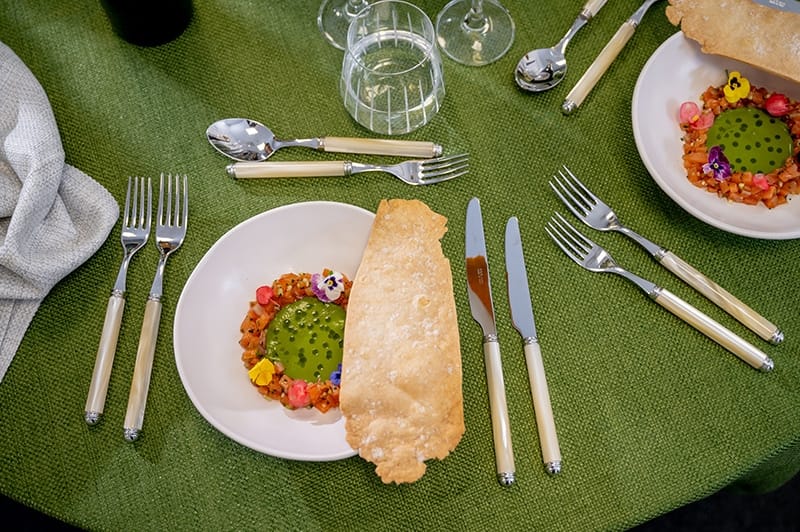
A plated wedding breakfast offers precise presentation. A carefully composed starter can arrive with fine details intact. A main course can be plated with balance and consistency. Individual dietary dishes can be managed through a clear service plan. The structure is part of its appeal.
That does not mean the meal has to feel stiff.
A modern plated wedding dinner might begin with lively canapés and cocktails, move into a beautifully seasonal three-course menu and then change energy completely once dinner and speeches finish. Service can be warm and personable. The menu can be full of character. Tables can feel abundant and relaxed even when the food arrives individually plated.
The continuing place of formal sit-down wedding dinners also challenges the idea that every wedding now needs to move away from seated dining.
The more useful question is whether you want a defined dining experience.
Plated service works especially well when:
- You want the meal to be a focal point.
- Speeches form an important part of the wedding breakfast.
- Guests will benefit from remaining comfortably seated.
- You want controlled pacing between courses.
- Presentation is particularly important.
- There are several dietary requirements that benefit from individual service.
It does require a well-developed timeline and an appropriate level of staffing. Guests need time to sit and enjoy the meal rather than feeling that courses are being hurried through to reach the next part of the schedule.
If your worry is that a plated wedding breakfast will feel “too formal”, think about the atmosphere around the plates. Menu design, table styling, lighting, music and the personality of the service team all influence the mood.
Structured dining can still feel warm, personal and completely your own.
Is a sharing menu right for your wedding?
Sharing menus suit couples who want a seated meal but prefer a more sociable, generous feeling around the table.
There is an immediate warmth to sharing food. Beautiful dishes arrive together, tables fill with colour and guests begin serving one another. Rather than everyone experiencing the meal entirely individually, the food creates small moments of interaction.
A sharing wedding menu can work particularly well when you want the atmosphere to feel relaxed without losing the sense that everyone has gathered for a proper meal.
It can also give the food a lovely sense of abundance. Seasonal salads, carefully prepared vegetables and generous centrepiece dishes can make the table feel alive.
The best sharing services, however, have been thought through beyond the menu.
Table space matters. A table already carrying candles, floral arrangements, glasses, water, wine and tableware needs somewhere for serving platters to land comfortably.
Portioning matters too. Food should be distributed across the room in a way that means every table feels equally looked after, and staff should remain present rather than disappearing once the platters arrive.
Guest comfort is another consideration. Passing a large dish may feel entirely natural at one table and less comfortable for another guest. Attentive waiting staff can quietly help without changing the sociable nature of the meal.
Sharing formats also need clear planning around wedding dietary requirements.
If one guest has a serious allergy and another is vegan, simply placing several dishes in the middle of the table without a clear service plan is not enough. Dietary food should still feel considered, generous and part of the same dining experience.
This is where the apparent informality of sharing food can be deceptive. Behind a relaxed table, there is still choreography.
When the table layout, quantities, presentation and staff support have all been properly considered, sharing food can feel wonderfully natural. Guests experience generosity and togetherness. They do not need to see the planning that made it work.
When do food stations work well at weddings?
Food stations work particularly well when you want the food to bring movement, choice and a sense of discovery to the celebration.
Instead of every guest receiving the same course simultaneously, people can explore different food moments. A chef may be cooking or finishing a dish in front of them. Different stations can offer contrasting flavours or styles. Guests have a reason to move through the space and talk to people beyond their own table.
For a relaxed or contemporary wedding, that energy can be very appealing.
Food stations are also well suited to some larger marquees and multi-zone reception spaces, where movement is already part of the event. They can become natural focal points within the layout rather than a single buffet line positioned at one end of a room.
They can feel highly polished and considered. The food might be presented with the same attention as a beautifully set table, with chefs, serving pieces and styling forming part of the experience.
But good food stations need room to breathe.
A station placed on the main route to the bar can create congestion. One popular food point serving a large guest list may create a queue. If all stations open at once while someone is trying to begin a speech, the room’s attention can be pulled in several directions.
Before choosing food stations, consider:
- How many guests will use each station?
- Can guests approach and leave comfortably?
- Will more than one serving point be needed?
- Where will queues naturally form?
- What staffing does each station require?
- How will dietary information be made clear?
- When will the stations open?
- How do they relate to the bar, dance floor and seating?
- Will guests who prefer to remain seated still be comfortably looked after?
Food stations are not simply a more attractive name for a buffet. At their best, they are active food experiences designed around the way guests move.
They may not be right for a wedding where you want everyone seated together for a long, structured meal. Equally, in the right space, they can give the reception a sense of energy and theatre that would be difficult to create through a traditional sit-down service.
The question is not whether food stations feel premium enough for a wedding.
The question is whether movement and interaction belong in the experience you want to create, and whether the space and service plan can support them beautifully.
Can relaxed wedding catering still feel premium?
Yes. Relaxed and premium are not opposites.
What makes wedding catering feel special is not simply whether a waiter places an individually plated main course in front of every guest. It is the quality of the cooking, the generosity of the food, the way it is presented, how attentive the service feels and whether everything happens at the right moment.
A relaxed format can be beautifully precise.
Canapés can arrive looking delicate and considered while being easy to enjoy with a glass in hand. Sharing dishes can feel abundant without overcrowding the table. Chef-led food stations can combine excellent ingredients with a visible sense of theatre.
Bowl food can work wonderfully for a social, moving reception when it is served with rhythm and substance. Guests should not spend the evening wondering whether another bowl will reach them. The quantity, frequency and distribution of service all matter.
The same applies to buffet-style service.
A well-managed buffet can offer variety and choice, but the whole experience needs consideration. How are tables invited to the food? Can people access it from more than one side? Is food replenished before a display begins to look depleted? Are serving areas kept beautifully presented as the service continues?
The word “buffet” does not determine the quality of the experience. Execution does.
Guest comfort remains important with cocktail-style or roaming formats. A wedding designed around movement should still give people places to sit, rest a drink and enjoy the food comfortably. Older guests, children and anyone with accessibility needs should not have to work harder to be part of the celebration.
Relaxed catering feels polished when guests sense that they have been thought about.
They may never notice that waiting staff were briefed to look after a particular table, that service timings were adjusted because photographs ran late or that food was deliberately released in stages to keep it fresh.
They simply feel comfortable, well fed and able to enjoy themselves.
For couples balancing their own preference for a more relaxed wedding with family expectations, that is often the most useful distinction. A seated three-course meal is one way to look after guests beautifully. It is not the only way.
How does your venue or marquee affect the best catering style?
The best wedding catering style for a venue is one that works with the space, rather than fighting against it.
Some dining rooms naturally lend themselves to seated service. The kitchen, table arrangement and service routes may already be designed around plates moving efficiently from the pass to guests.
Other venues encourage movement between several rooms, terraces or outdoor areas. In those settings, canapés, stations or a more flexible service style may work naturally with the way people already use the space.
Before choosing a format, look beyond how beautiful the room is.
Where will the food actually be prepared or finished? How far will waiting staff travel between the kitchen and tables? Where do used plates return? Is there room for a station without narrowing a main guest route?
Our wedding venue catering guide explores these venue considerations in more detail.
What about marquee, estate and private home weddings?
Marquees and blank canvas settings can offer enormous freedom.
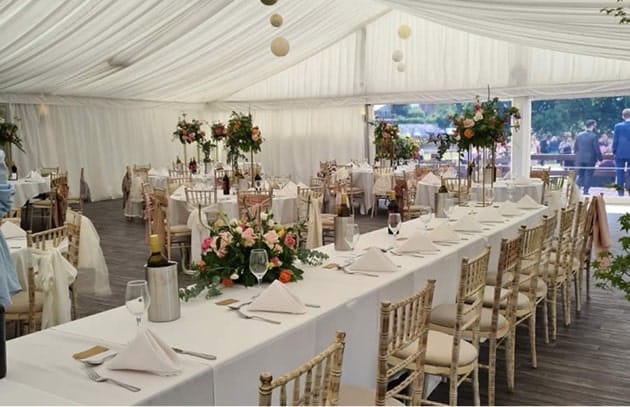
You are not necessarily inheriting a fixed dining room or an existing service layout. Tables, the bar, dance floor and food areas can often be planned around the kind of celebration you want to create.
That makes it possible to design a warm sharing meal, an elegant plated wedding breakfast or a reception with several food moments across the space.
The catering should be part of that layout conversation early enough to make the freedom useful.
Preparation space, equipment, power and service routes all need to support the chosen format. A plated menu for a large guest list needs an appropriate area for food to be finished and plates to be organised. Sharing dishes require a different service sequence. Stations need room for guests as well as chefs and equipment.
The bar position matters too. So does the route between the ceremony, drinks reception and meal.
For a deeper look at marquee wedding catering the key principle is that a marquee should be seen as an opportunity to shape the experience, not as a compromise.
The right catering format can be designed into the setting from the start.
How to combine catering styles across the day
You do not need to choose one wedding catering format and use it from the first drink to the final song.
In fact, different parts of the day often need different things from the food.
Canapés after the ceremony serve a very particular hospitality purpose. Guests may have travelled, the couple may be away having photographs taken and drinks are beginning to flow. Small, carefully timed bites help everyone settle comfortably into the reception.
The wedding breakfast might then become more structured.
You could choose a sharing-style starter to create warmth around the tables before moving into an individually plated main course. Alternatively, a plated meal might be followed by a dessert station that encourages guests to stand, explore and begin changing the energy of the room.
As evening approaches, food can become more relaxed again.
Food stations might open once dancing is underway. Bowl food could circulate during a cocktail-style reception. Late-night snacks can arrive at precisely the point when guests need something savoury and satisfying.
One wedding might therefore move through:
Canapés → sharing wedding breakfast → dessert station → late-night food
Another might be:
Canapés → plated three-course meal → cake → chef-led evening station
The purpose is not to add as many formats as possible. Every food moment should have a reason to be there.
The timing of canapés, the main meal, dessert, cake and evening food needs to make sense together. Our guide on how to plan wedding food around the whole day takes that wider timeline into more depth.
Couples looking for more individual service and food inspiration can also explore wedding catering options your guests will love.
Combining catering styles works best when the experience still feels coherent. Ingredients, presentation and service personality can create continuity even when the method of serving food changes.
Think of the day as having its own rhythm.
Food can welcome people, settle them, bring everyone together and then help lift the energy again later in the celebration.
Choosing a style that feels right for you and your guests
The right wedding catering style is the one that suits the atmosphere you want to create, the people you are inviting, the space you are using and the way you want the celebration to unfold. The best format is not necessarily the most traditional or the most unusual. It is the one that allows the day to feel natural, generous and beautifully looked after.
This is also why catering style is often easier to choose through conversation than from a brochure.
An experienced caterer should want to understand your guest list. They should ask about the venue or marquee, the ceremony timing, speeches and how you imagine the room feeling once everyone sits down or begins to mingle.
That discussion is central to tailored wedding catering because the service format needs to support the day rather than simply fit an existing menu package.
You may begin convinced that you want a sharing meal and then realise the tables you love leave very little room for serving dishes. You might initially worry that plated dining feels too formal, before discovering that a seasonal menu and warm service style can give you the relaxed atmosphere you wanted with the structure your guest list needs.
A tasting can then help bring those decisions into sharper focus. Understanding what happens at a wedding menu tasting can help you see how food, presentation and service direction are refined before the wedding.
You do not need to know every answer before speaking to a caterer.
What helps is being able to describe the experience you want: a long and generous meal, a room full of movement, an elegant dinner that never feels stiff, or a relaxed celebration where guests are exceptionally well looked after.
The format can grow from there.
Shape the catering around the day you want to create
If you are deciding between plated dining, sharing menus, food stations or a more relaxed style of wedding catering, Vanilla Bean can help you shape the food and service around the celebration you have in mind.
From elegant seated meals to generous sharing dishes and beautifully considered food moments throughout the day, the right format should feel natural for you, your guests and your setting.
talk to Vanilla Bean about your wedding catering
Written by Vanilla Bean, a premium catering and events company specialising in weddings and private celebrations across Surrey, London and the surrounding counties.
Contact us on 01932 356180 or email surrey@vanilla-bean.co.uk
Wedding catering styles FAQs
Marquee weddings can suit plated meals, sharing menus, food stations and relaxed evening food. The best catering style depends on the marquee layout, preparation space, service routes, guest numbers and, above all, the atmosphere you want the celebration to have.
Food stations can work extremely well when the venue has enough space and the guest flow, staffing and service timing have been properly planned. They are particularly effective for couples who want variety, interaction and a dining experience with more movement.
Yes. Sharing menus can feel generous, warm and beautifully considered when the presentation, table space, portions and staff support have been carefully planned. Clear handling of dietary requirements is also important so every guest receives the same level of care.
A plated wedding breakfast can feel formal, elegant or more relaxed depending on the menu, styling, service and wider atmosphere. It remains a strong option when you want structure, controlled timing and the meal to be a central moment of the wedding.
The main wedding catering styles include plated dining, sharing menus, food stations, buffet service, bowl food, canapés and evening food. Many weddings combine several formats so that each part of the celebration has the right atmosphere and service rhythm.